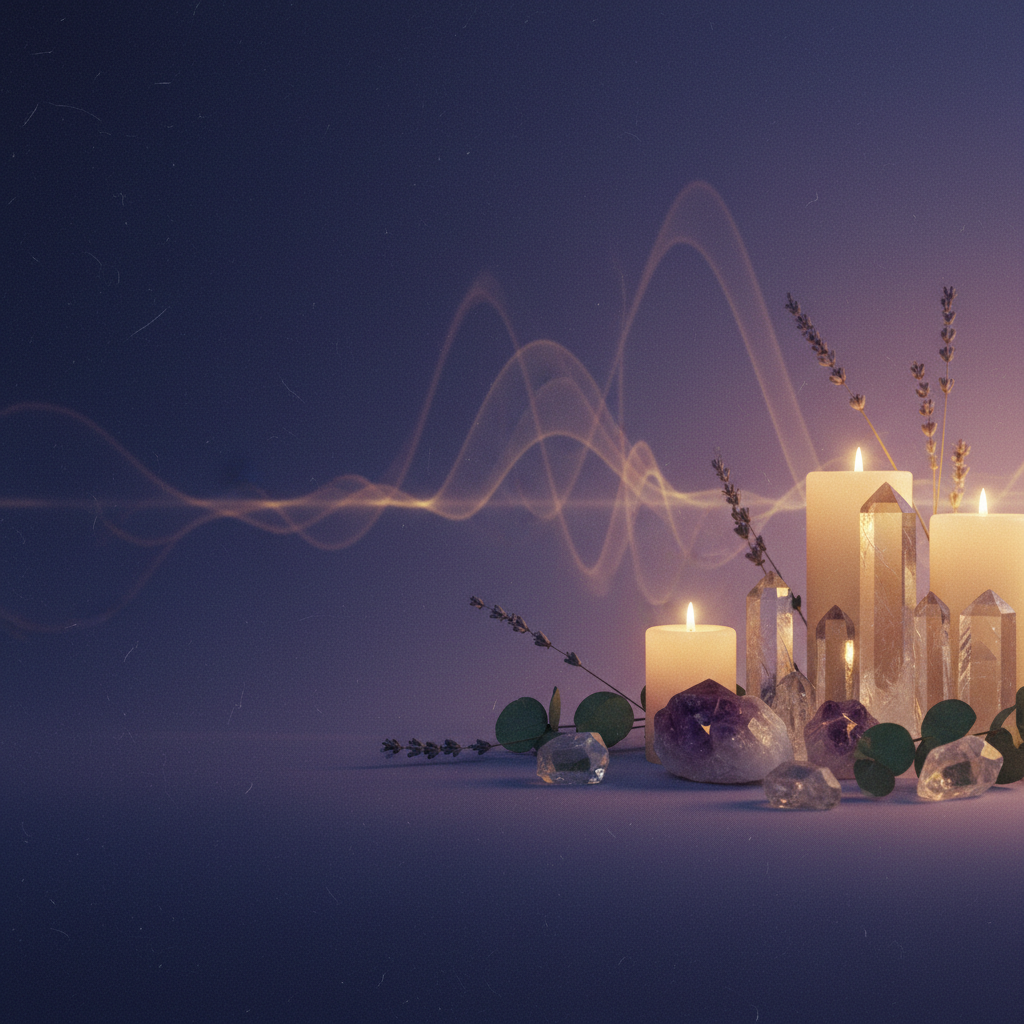
The gentle hum of a crystal bowl, the rhythmic pulse of a drum, the whispered notes of a chimes – these aren't just sounds; they are invitations. In the sacred containers we create for healing, every element holds weight and meaning, none more so than the subtle, pervasive influence of sound. As we, as healers and practitioners, strive to create truly safe and transformative spaces, understanding how to weave sound with intention becomes paramount, especially when working with those who carry the echoes of trauma.
Key Takeaways
- Understanding the Nervous System: Recognize how sound directly impacts the vagus nerve and the body's stress response, particularly in trauma survivors.
- Safety as Foundation: Prioritize predictability, choice, and control when integrating sound into any healing modality.
- Intentional Sound Selection: Learn to choose sounds based on their potential impact, considering frequency, rhythm, and timbre.
- Cultivating Sensory Awareness: Develop your own and your clients' capacity to attune to sound in a nuanced, non-overwhelming way.
- Integrating Beyond the Session: Empower clients to use sound as a self-regulation tool in their daily lives.
- Ethical Considerations: Maintain cultural sensitivity and an awareness of potential triggers in sound choices.
The Resonance of Safety: Why Trauma-Informed Sound Matters
Our bodies are magnificent instruments, constantly interpreting and responding to the world around us. For individuals who have experienced trauma, this interpretive lens is often hyper-vigilant, scanning for threat even in seemingly benign environments. Sound, a primal force, can either soothe and regulate or inadvertently re-trigger and dysregulate. This is why cultivating trauma informed sound healing spaces isn't just a best practice; it's an ethical imperative.
As practitioners, we are tasked with holding space where vulnerability can flourish. When we understand the profound connection between sound, the nervous system, and memory, we can consciously craft soundscapes that support regulation, cultivate presence, and gently invite the body back into a state of felt safety. It's about moving beyond simply playing "relaxing music" and into a nuanced, informed approach that honors each individual's unique journey.
Foundations of a Trauma-Informed Sound Approach
Before we even consider which instruments to use or what frequencies to explore, we must ground our practice in core trauma-informed principles. These principles serve as our guiding stars, ensuring that our intentions translate into truly supportive experiences.
Principles for Sound Integration
- Safety First: This is the bedrock. Does the soundscape contribute to a sense of predictability, choice, and control for the client?
- Transparency and Predictability: Always inform clients about what sounds they might experience. Offer explanations for why certain sounds are being used.
- Choice and Control: Empower clients to choose if they want sound, what kind, and at what volume. Offer options for opting out or adjusting.
- Collaboration and Empowerment: Work with clients, not on them. Their input is invaluable.
- Cultural Humility: Be mindful of the cultural origins and meanings of sounds and instruments. Avoid appropriation.
- Acknowledging Triggers: Understand that any sound can be a trigger for someone. Be prepared to adapt and respond with compassion.
Crafting the Soundscape: Intentional Selection and Application
The beauty of sound work lies in its versatility. From the subtle background hum of an ambient track to the direct vibration of a tuning fork, each element can be woven with intention.
Understanding Sound Qualities
Consider these aspects when selecting sounds for your trauma informed sound healing spaces:
- Frequency: Lower frequencies (e.g., gongs, drums) can be deeply grounding and help release tension. Higher frequencies (e.g., chimes, crystal bowls) can be uplifting and assist with clearing. Consider the overall balance.
- Rhythm: Predictable, slow rhythms can be incredibly regulating. Erratic or sudden rhythms can be dysregulating.
- Timbre (Sound Quality): Is the sound warm, bright, mellow, piercing, resonant? How might these qualities be perceived by someone with a sensitive nervous system?
- Volume and Dynamics: Gentle, gradually introduced sounds are generally safer. Avoid sudden changes in volume or intensity.
- Duration: How long will a particular sound or soundscape last? Is there space for integration and quiet?
Instruments and Tools for Trauma-Informed Use
- Crystal and Tibetan Singing Bowls: Known for their sustained, resonant tones. Introduce gradually, avoid placing directly on the body without explicit consent and careful explanation.
- Gongs: Powerful and immersive. Use with extreme caution and always with an introduction to their sound. Start very softly and build, allowing clients to opt out or move away.
- Chimes (Kosmos, Zaphir, Wind): Gentle, ethereal, and often perceived as non-threatening. Excellent for subtle atmospheric enhancement or transitions.
- Drums (Frame, Ocean, Hand): Can be grounding and evoke primal rhythms. Use with light touch and gentle, predictable patterns. Avoid aggressive or startling beats.
- Tuning Forks: Can be deeply therapeutic when applied to the body. Always explain the sensation, demonstrate, and seek explicit, ongoing consent. Start with forks away from the body.
- Nature Sounds: Rain, gentle waves, birdsong can be universally soothing, but ensure authenticity and avoid artificial or overly dramatic recordings.
- Ambient Music/Drones: Music specifically designed for relaxation often features sustained tones and minimal melodic complexity, which can be less activating.
"The ear, by its very nature, is a gateway to the deepest levels of the nervous system. When we offer sounds that are predictable, gentle, and intentional, we are, in essence, whispering safety to the soul."
Practical Integration Strategies
Here’s how you can weave sound into your practices with a trauma-informed lens:
Before the Session
- Client Intake and History: During your initial intake, inquire about clients' relationship with sound. Ask if there are any sounds that are particularly soothing or triggering.
- Set the Stage: Describe the potential use of sound. "Today, I might be using a gentle chime to mark transitions, or a soft drum to help you feel more grounded. You are always in control, and we can adjust or stop anything at any time."
- Offer Choices: "Would you prefer silence, or would you be open to some gentle ambient music?" "If we use a bowl, would you prefer it near you or further away?"
During the Session
- Start Subtle: Introduce sounds softly and gradually. Observe your client's non-verbal cues.
- Prioritize Grounding: When working with sound, always provide opportunities for grounding – whether through breath, body awareness, or connection to the earth.
- Pacing and Pauses: Allow ample space between sounds. Silence is just as vital as sound in a trauma informed sound healing space. These pauses allow for integration and processing.
- Check-ins: Periodically check in with your client. "How does that sound feel in your body right now?" "Is the volume comfortable?"
- Empowerment through Control: Have volume controls or 'mute' options readily available, or invite clients to adjust their position relative to the sound source.
- Transitions: Use gentle sounds to signal transitions – beginning, changing positions, ending. This predictability is incredibly regulating.
After the Session
- Integration Time: Allow for quiet time after sound work for clients to integrate their experience.
- Processing: Invite reflection. "What did you notice about the sounds today?" "How did they affect your body or emotions?"
- Self-Regulation Tools: Teach clients how to use simple sounds (e.g., humming, listening to nature, gentle music) as self-regulation tools at home.
Cultivating Your Own Sensory Awareness
To truly master the art of creating trauma informed sound healing spaces, you must first cultivate your own deep sensory awareness.
Practices for Practitioners
- Listen Actively: Practice distinguishing individual sounds in your environment. Notice their quality, duration, and effect on your own nervous system.
- Explore Instruments Mindfully: Before using an instrument with a client, spend time with it yourself. Notice its subtle nuances, its resonance, and how it impacts your own being.
- Silence as a Teacher: Embrace periods of silence. What arises in the absence of external sound?
- Receive Sound: Engage in sound healing sessions as a receiver. This offers invaluable insight into the client experience.
- Journal Your Observations: Keep a journal of your experiences with sound – both giving and receiving. Note what feels regulating, what feels activating, and what themes emerge.
By honing our own capacity to attune to sound, we deepen our empathy and expand our toolkit for serving others with profound wisdom and care.
Frequently Asked Questions
### How do I know if a sound is triggering for a client?
The best way is to ask! Always have open communication. Beyond that, observe non-verbal cues: sudden changes in breath, fidgeting, tensing of the body, closing off, or a change in facial expression can all indicate discomfort. If you notice any of these, pause and gently check in.
### What if I only have a limited range of instruments?
You don't need an extensive collection. Even simple tools like your voice (humming, gentle toning), small chimes, or curated ambient recordings can be incredibly effective. The intention and how you introduce and use the sound are far more important than the cost or complexity of the instrument.
### Can I use my voice for trauma-informed sound healing?
Absolutely! Your voice is one of the most powerful instruments you possess. Gentle humming, soft toning, or even a soothing speaking voice can be incredibly regulating. Always ensure your vocalizations are clear, predictable, and offered with a compassionate, grounded presence.
### Should I avoid all "loud" or "intense" instruments?
Not necessarily, but extreme caution is advised. Gongs, for example, can be deeply transformative. The key is in the introduction and control. Always start very softly, explain what's coming, offer options to move away or opt out, and prioritize gradual exposure. The goal is never to overwhelm.
Share Your Voice
This journey of crafting trauma informed sound healing spaces is a continuous unfolding, a testament to our commitment to ethical and deeply resonant practice. We are all learning, growing, and expanding our capacity to serve.
We would be honored to feature your wisdom on the Sacred Healing Voices podcast. If you are a healer, practitioner, or wellness leader with insights to share on sound, trauma, or the intersection of these powerful modalities, we invite you to apply.